
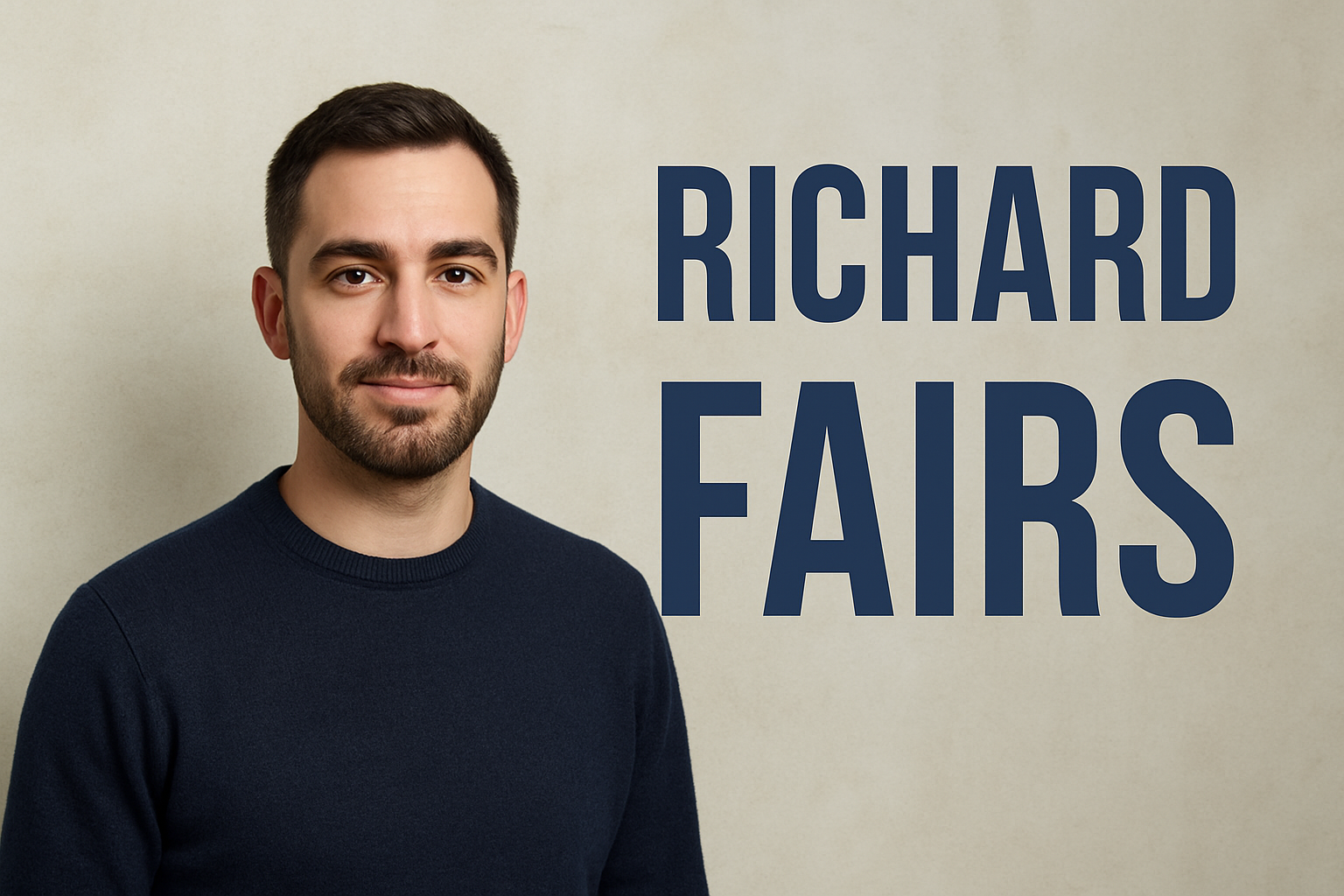
Over the last few months, the name richard fairs has been popping up in various online discussions, news searches, and social media conversations. Many people are searching for information related to this name. However, the reality is that there might be several people with this name, each one being linked to different areas, professions, and mentions. Therefore, recognizing the background of the name necessitates examining the formation of online attention, the spread of inquisitiveness, and how one name can stand for several different stories.
The present article is a safe, coherent, and SEO-optimized investigation of the keyword richard fairs, its enhanced online presence, and the determinants of how names become topics that people look up. It does not resort to conjecture about private individuals and instead concentrates on the identified, universal, and publicly accessible patterns.
The Rise of the Name “Richard Fairs” in Online Conversations
People frequently look up the name richard fairs for a number of reasons. Sometimes people mention it in the entertainment industry, and other times they use it in the professional worlds of business, technology, and creative industries. In the online realm, even a minor mention can make a name trendy, particularly when people who are curious share it or when they relate it to popular figures.
The reason why this is so fascinating is the speed at which info goes nowadays. If a reporter talks about a person, a famous person is related to someone who has the same name as him, or a news article is about something similar, the number of searches can go up in a matter of seconds. Readers usually want context, background, and clarification—and nowhere is this need more crucial than in the case of informative content.
Digital Curiosity Behind Name Searching
The case of a name becoming a topic of discussion is not necessarily that of the person the name belongs to. It often happens that people look up richard fairs but what they actually do is follow a pattern which is more general:
1. Same Name for Different People
One name is often enough to be shared by many people with a different professions. There might be a researcher, an executive, and a person from the creative industry among those sharing the name. When the public sees a name that they have not heard of before, they want to know more without even realizing it.
2. More Mentions Online, More People Talk
It is quite sure that the interest will go far beyond a single instance if it is a topic for a large number of people. People can quickly find the wrong “richard fairs” when they look up the recent occurrence of the name and then their wondering about the right one only grows further in the meantime.
3. Social Media Helps Curiosity to Spread Even Faster
Social media amplifies speculation, connections, and guesses. A single hashtag or discussion can suddenly push someone’s name into the spotlight and trigger thousands of inquiries.
Reasons behind People’s Desire to Know More
Being curious is a typical human trait and, in this case, it requires the presence of a certain context to be true. In the instance of a name like richard fairs users mostly look for:
Professional Background
One might ask what particular area the given name belongs to. Is it that one involved in tech, business, entertainment, or academics?
Public Relevance
Sometimes, a name is getting noticed due to connections – whether direct or indirect – with famous people or trending topics.
Online Identity Verification
Users often look for distinguishing factors between people who share the same name, so they end up identifying multiple individuals—especially when misinformation is spreading.
The aforementioned urge for clear information is what is behind the rise in the amount of requests for responsible and accurate content – content that does not indulge in guessing but rather helps readers build comprehension in a structured way.
A Broader Look at Name-Based Search Trends
We can provide readers with more profound insights when we delve into the rise of the digital relevance of names such as richard fairs.
1. Digital Footprints Shape Visibility
Being listed in online directories, joining professional networks, publishing content, and appearing in event listings all increase the number of searches for you.
2. Media Mentions Spark Curiosity
In case a name is very lightly or offhandedly talked about by celebrities or public figures, people cannot wait to search for more information about it.
3. SEO and Algorithms Amplify Interest
To a great extent, search engines focus on words that are trending, which in turn makes them more visible, thus the process of continuous finding goes on.
Using “richard fairs” as a Study of Internet Culture
When the study of human interaction with a word like richard fairs is done, we come to the understanding of the digital era.
Names Become Symbols
Sometimes one particular name becomes a symbol of a certain story, event, or cultural moment.
The Internet Blends Multiple Identities
Millions of people have the same names as others online. As a result, search results are usually a mix of different people with the same names. So, understanding the surroundings of the text is very important.
Curiosity Drives Search Behavior
People want explanation. When in a dilemma, they will investigate, read, and try to make sense. That is precisely the reason why search trends come into existence.
How to Approach Information Responsibly
Should you find a reference to richard fairs on the web, these are some of the hands-on measures you could take to ensure the security of your information interpretation:
1. Verify the Source
Always ensure that the information is obtained from trustworthy sources like news magazines, official web pages, or confirmed accounts.
2. Avoid Mixing Identity Profiles
Several people can share the same name, so you should never assume any piece of information belongs to only one person.
3. Look for Credible Context
Good journalism first verifies whether a name is genuinely connected to a specific area—such as a public figure or a trending issue—instead of relying on speculation.
4. Respect Privacy
Do not base your decisions on people’s personal stories that are not confirmed. Concentrate on the facts that are open to everyone and are truthful and ethical.
Final Thoughts
The internet is rapidly changing. A name like richard fairs may suddenly pop up in search trends thus attracting the attention of thousands of curious readers. The best way to handle such situations is to avoid jumping to conclusions about people’s lives and instead actively examine the bigger picture behind the phenomenon. By studying how trending names emerge, how public curiosity forms, and how responsible information circulates, we can better understand the full context.